Local Practice, Global Reach: Findhorn Foundation Granted ECOSOC Consultative Status
written by May East, John Clausen and Frances Edwards
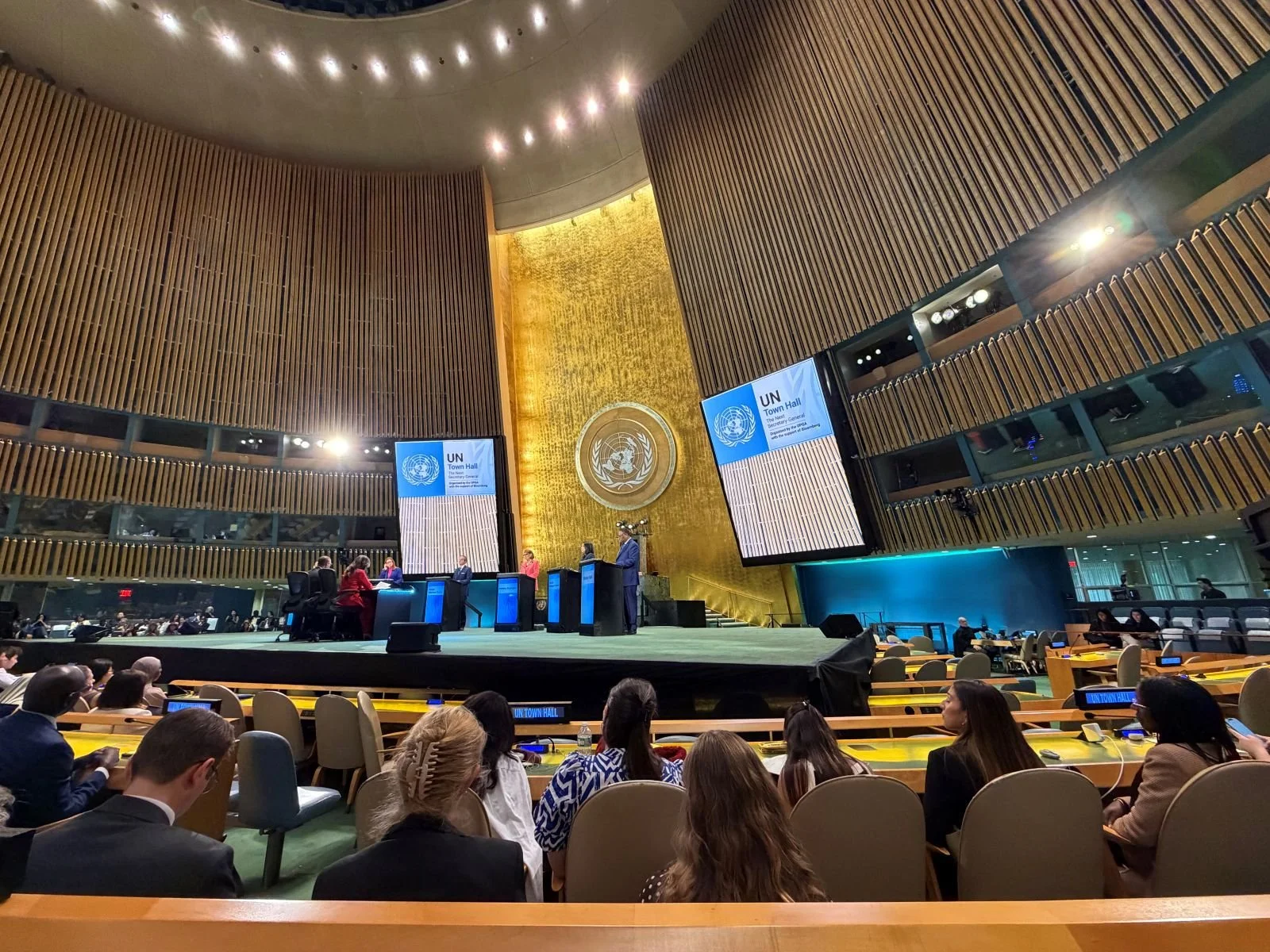
The 2026 UN Town Hall with candidates for the next Secretary-General attended by Member States and civil society representatives, including the Findhorn Foundation.
In June 2026, the Findhorn Foundation was granted Special Consultative Status with the United Nations Economic and Social Council – ECOSOC. This milestone marks more than three decades of engagement with the United Nations and opens a new chapter in our contribution to international dialogue in UN briefings, major groups, and spiritual or unitive policy caucuses.
The Findhorn Foundation has long aligned its work with the principles of the UN Charter. This relationship formally began in 1992, when the Foundation participated as an official NGO (Non-Governmental Organisation) in the United Nations Conference on Environment and Development (the Earth Summit) in Rio de Janeiro. In 1997, it became an NGO associated with the UN Department of Global Communications (formerly Department of Public Information).
The Ecovillage at Findhorn has been designated twice by UN-Habitat as a Best Practice for Sustainable Living. The Findhorn Foundation has also engaged in municipal capacity development through CIFAL Findhorn, a UNITAR-affiliated training centre that operated for ten years. Through education, capacity building, and direct implementation, the Foundation has contributed to advancing the Earth Charter, the Millennium Development Goals (MDGs), and the Sustainable Development Goals (SDGs). Its continuing engagement, now as Findhorn Foundation SCIO, includes convening monthly meditations at United Nations Headquarters through the Spiritual Caucus and co-founding the NGO Major Group’s Unitive Cluster.
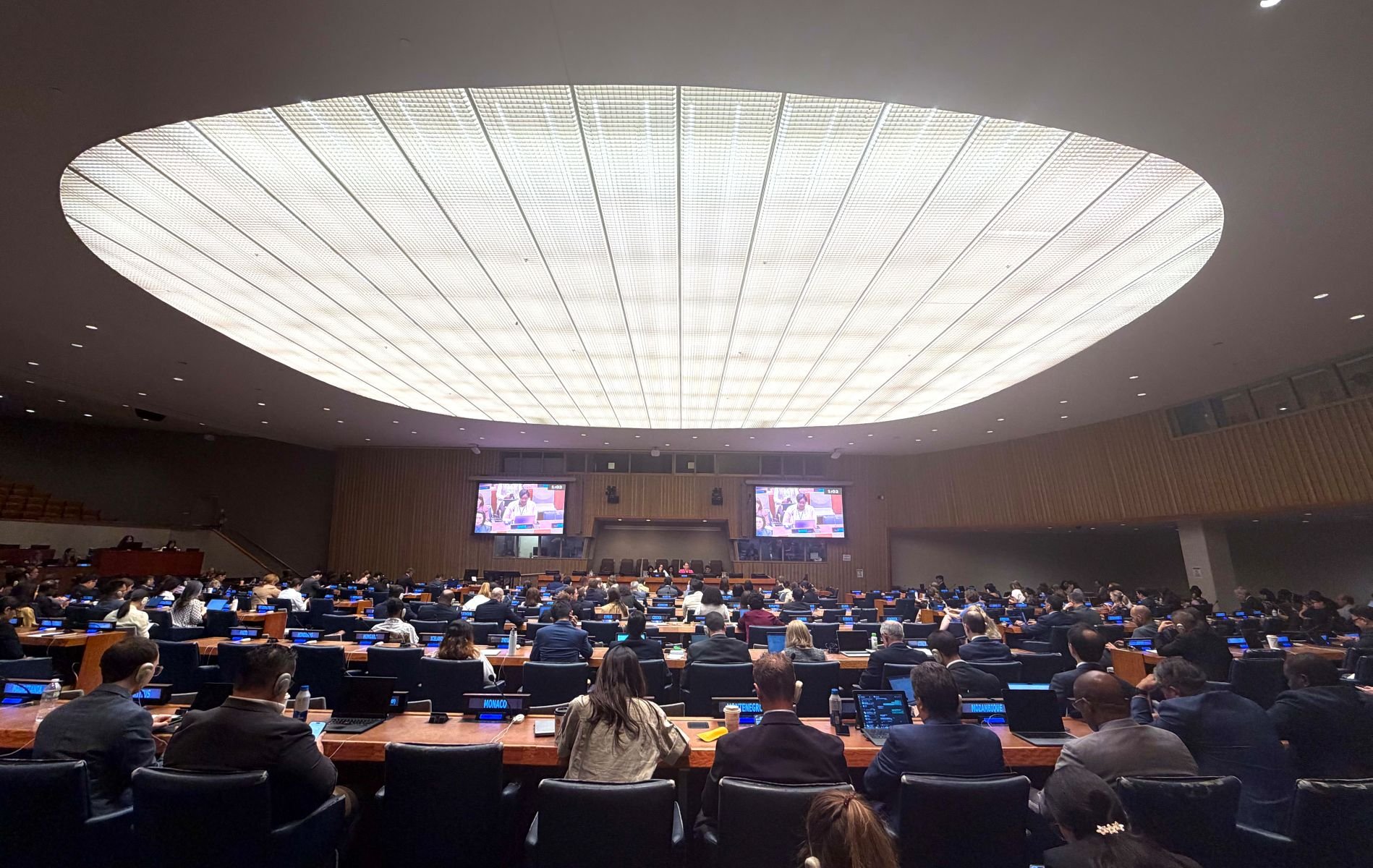
Established under the UN Charter in 1945, ECOSOC reflects the understanding that lasting peace and security must be underpinned by economic stability, social progress and international cooperation.
What is ECOSOC?
The United Nations Economic and Social Council – ECOSOC– is at the heart of the United Nations system to advance the three dimensions of sustainable development – economic, social and environmental. It is the central platform for fostering debate and innovative thinking, forging consensus on ways forward, and coordinating efforts to achieve internationally agreed goals. It is also responsible for the follow-up to major UN conferences and summits.
Consultative status gives NGOs a formal voice in this work, enabling them to contribute expertise, participate in meetings and help shape international dialogue.
For the Findhorn Foundation, the new status builds on its longstanding relationship with the United Nations which has centred on three interconnected areas: transformative education, sustainable human settlements and the cultivation of a culture of peace.
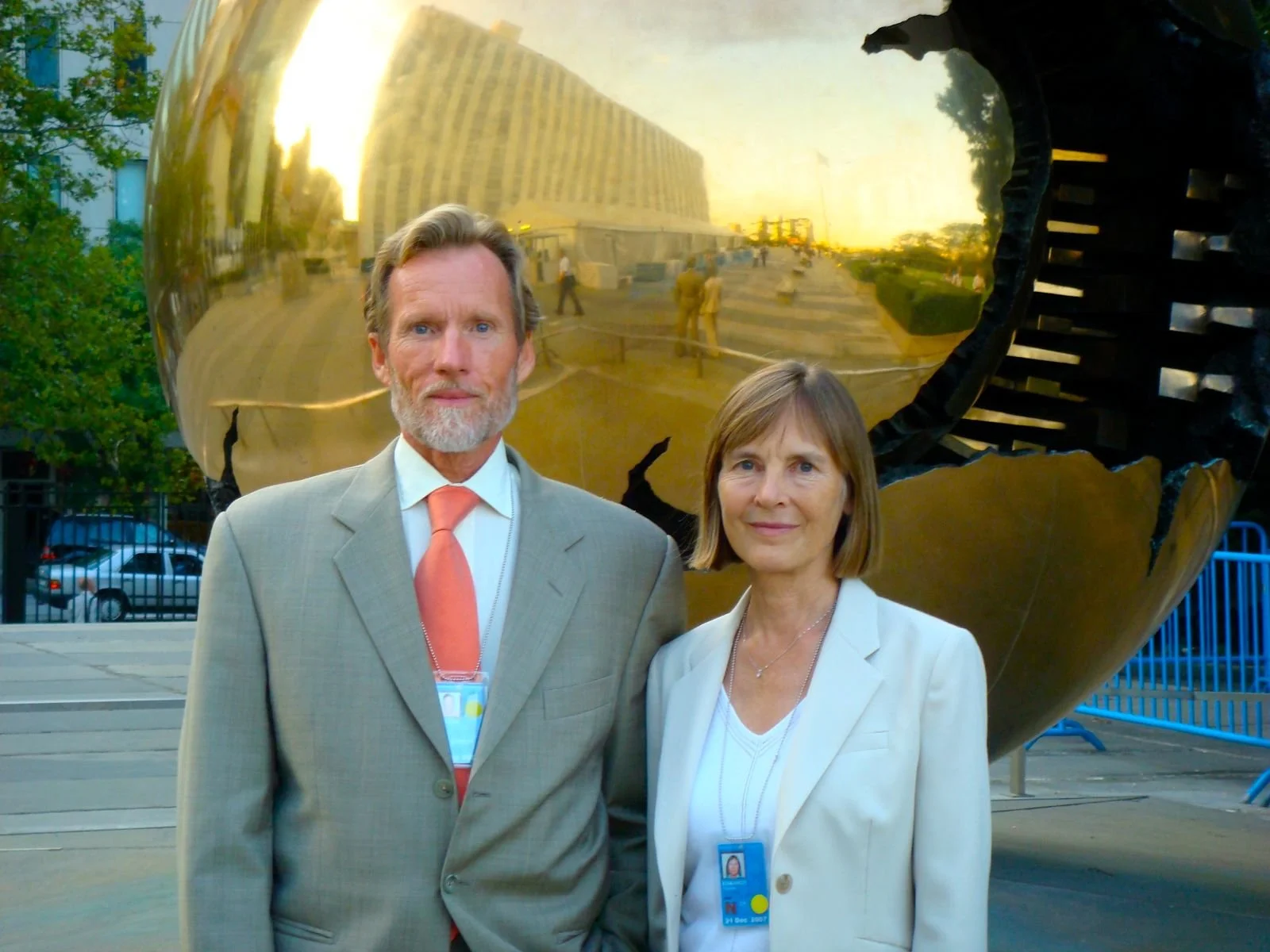
Carrying Findhorn’s values into UN dialogue: John Clausen and Frances Edwards at UN Headquarters.
Marking a new chapter in New York
The granting of ECOSOC consultative status was followed by two significant engagements in July 2026. The first took place during the United Nations High-level Political Forum on Sustainable Development, the UN’s principal platform for reviewing progress towards the 2030 Agenda and the Sustainable Development Goals.
The Findhorn Foundation joined Brahma Kumaris, Gaia Education, Pathways to Peace and the Unitive Cluster of the NGO Major Group in co-hosting The Power of Vision: Advancing Integrated and Interconnected Development. The event explored how shared vision, inner transformation and partnership can move sustainable development beyond fragmented, short-term responses.
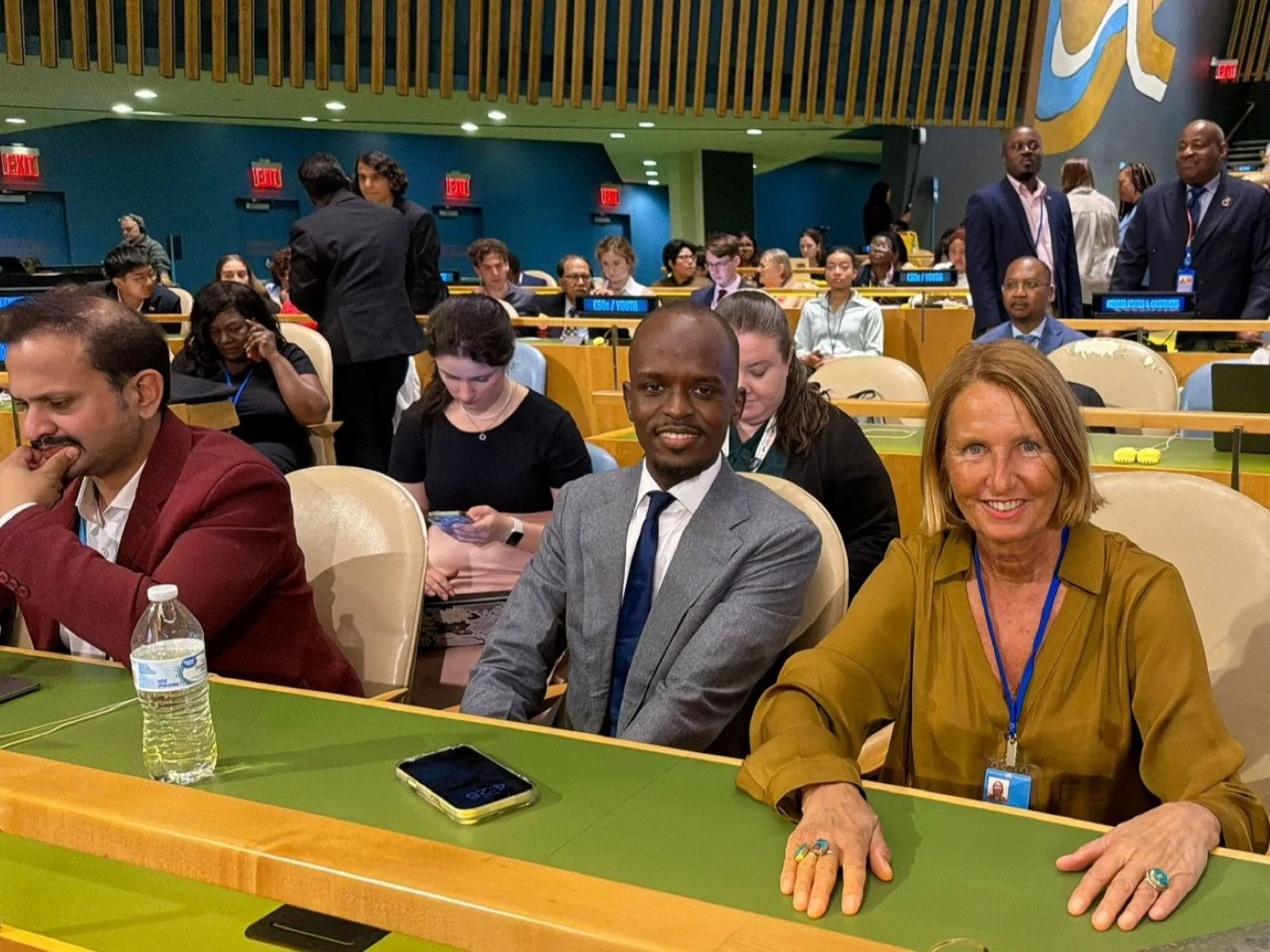
May East representing the Findhorn Foundation at the 2026 UN Town Hall.
The second engagement was the unprecedented public UN Town Hall with candidates seeking to become the next Secretary-General, held in the General Assembly Hall. The gathering brought the candidates into direct conversation with diplomats, representatives of Member States and civil society organisations associated with ECOSOC and the UN Department of Global Communications.
Together, these events reflected complementary dimensions of the Findhorn Foundation’s UN engagement: contributing to the global sustainability agenda while participating in wider conversations about the leadership, legitimacy and future direction of the United Nations itself.

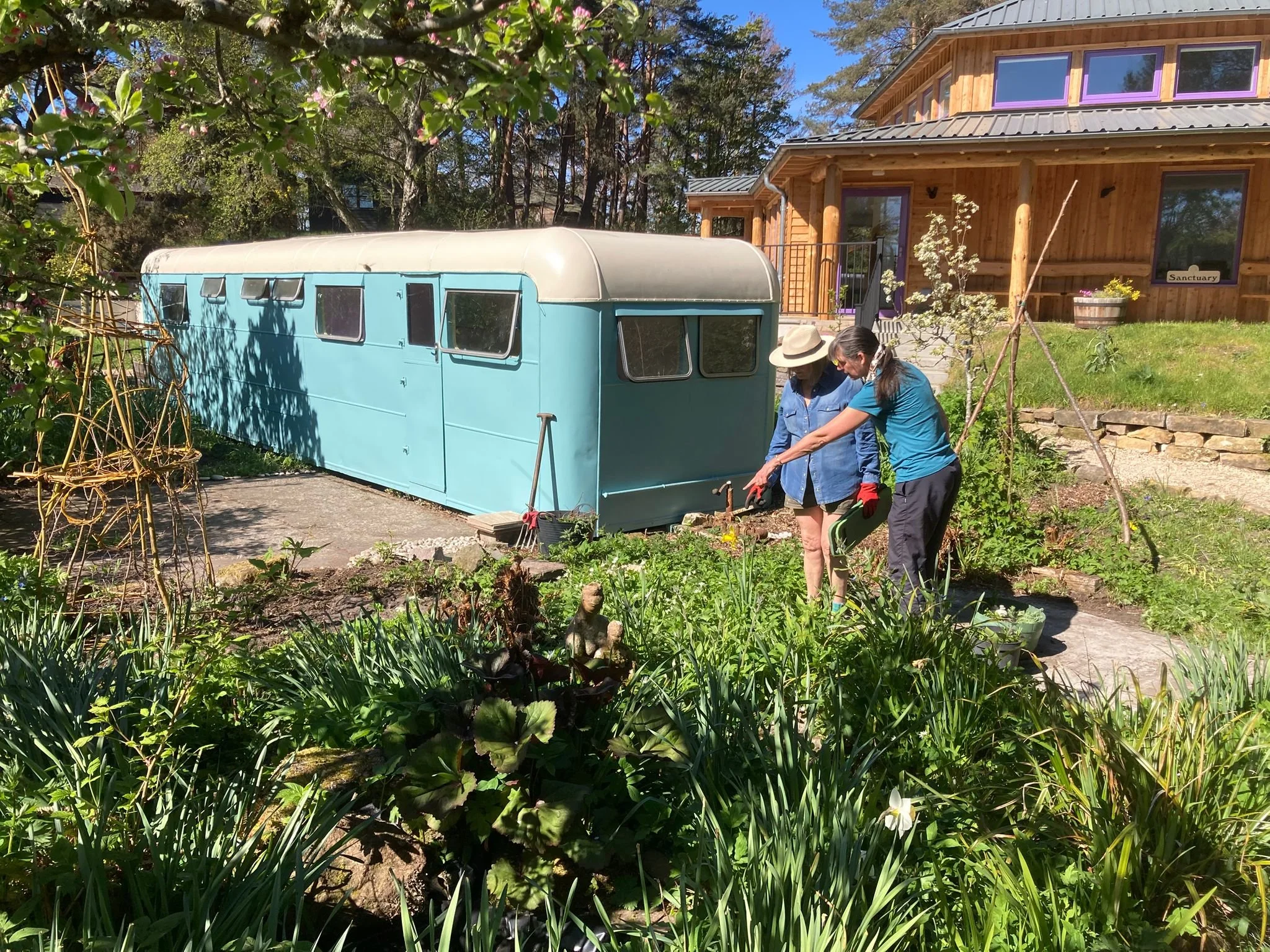
Ecovillage Findhorn as seen from above. Over the decades several clusters of eco housing transformed the former airfield and caravan park into a thriving ecological and spiritual settlement, which wasn’t much more than sand dunes and caravans when the community started in the 1960s.
From recognition to responsibility
Special Consultative Status is an important recognition, but it also brings responsibility. It creates new opportunities for the Findhorn Foundation to share knowledge grounded in decades of experimentation, convene dialogue among visionaries and decision-makers, and contribute to international processes concerned with the redesign of our presence on the planet.
At a moment when trust in international institutions is under pressure and progress towards the Sustainable Development Goals remains uneven, the Ecovillage at Findhorn offers something both modest and essential: evidence that global aspirations can be practised at a human scale.
Among its key contributions are practical models for sustainable human settlements and an exploration of how we can restore regenerative relationships with ourselves, society and the Earth through frugality, simplicity and the sharing of resources. The Ecovillage offers real-world evidence of low ecological footprints, local governance, and cooperative economics, alongside values-based education that supports the Sustainable Development Goals. It can also share decades of experience in reflective dialogue and creative conflict resolution, capacities urgently needed in the world today.
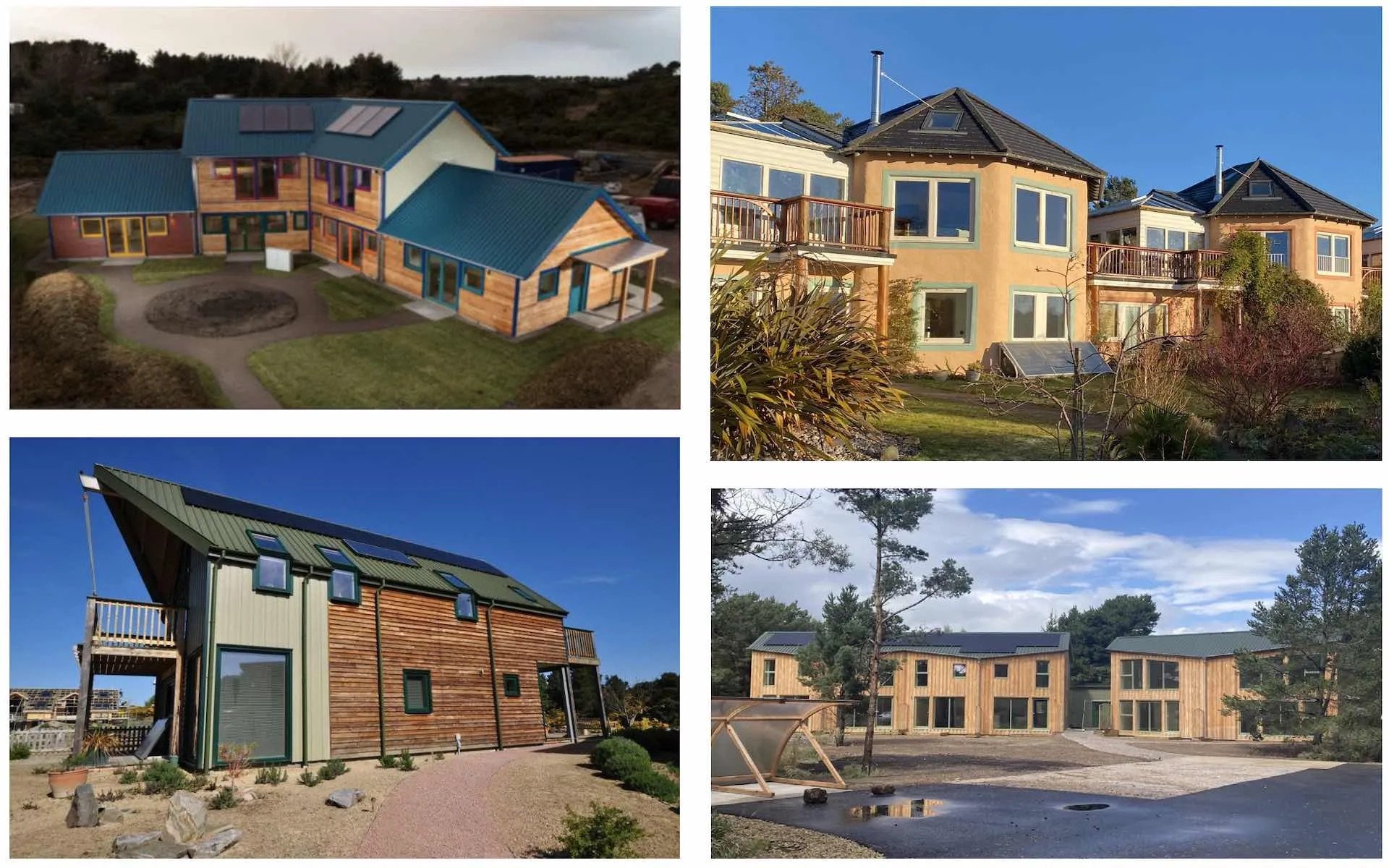
Some of the latest houses built at Ecovillage Findhorn. Every generation of housing gets greener, more beautiful and poetic. The buildings are designed and built in deep connectivity with the land and the elements, following the highest ecological standards.
The relationship between the Findhorn Foundation and the United Nations bridges global frameworks planning with localized, practical action. While the UN provides international vision and policy infrastructure, the Findhorn ecovillage community offers a real-world testing ground where those global aspirations can be lived, evaluated, and continually renewed.
The granting of ECOSOC consultative status strengthens that bridge – from local practice to global dialogue, and from international commitments to the everyday work of creating a more peaceful and regenerative world.