
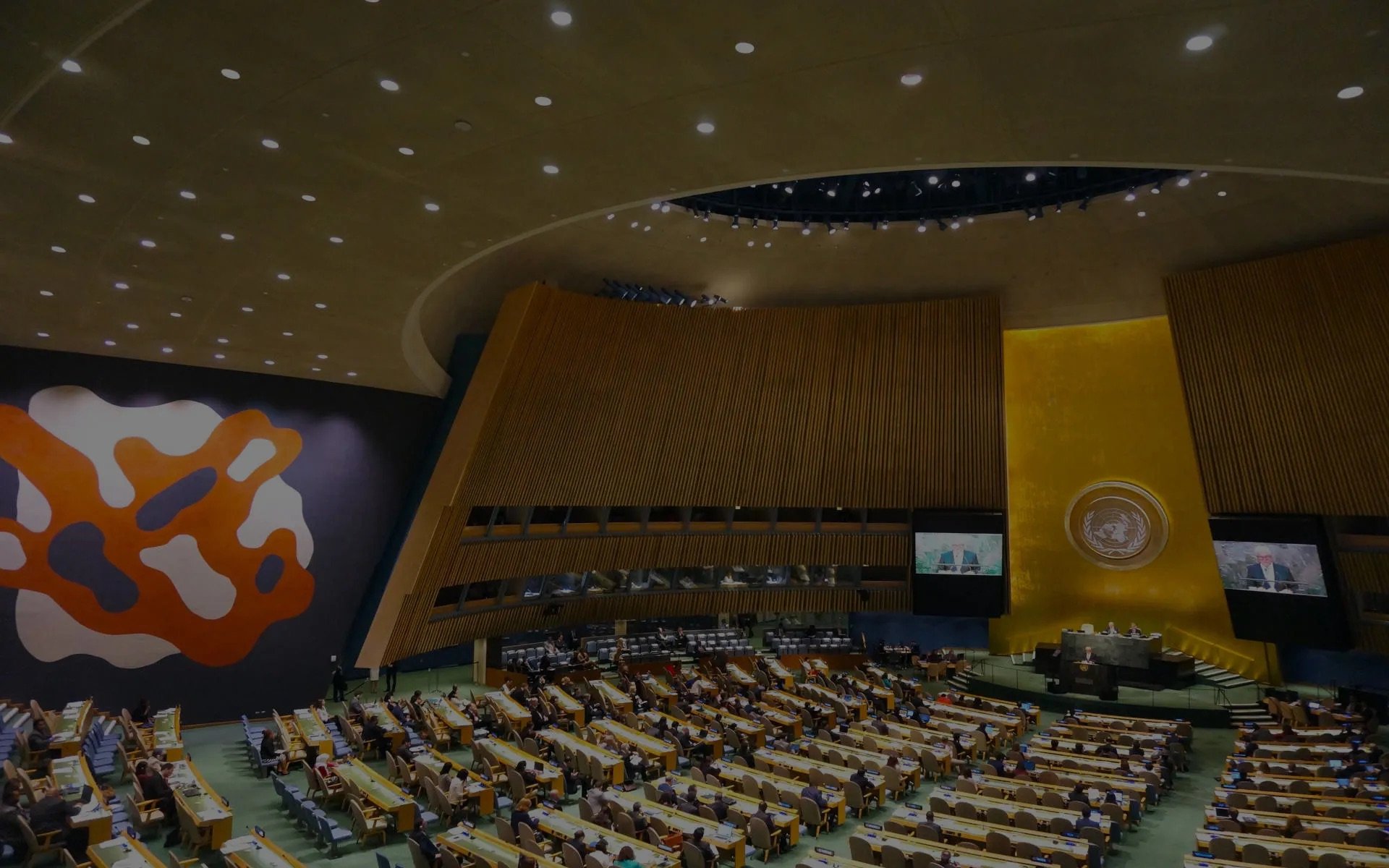
Findhorn Foundation Trust and the United Nations
A Shared Commitment to a Better World
This subpage is part of information about the Findhorn Foundation Trust.
Why the Partnership with the United Nations is Life-Enhancing
The Findhorn Foundation Trust marked 30 years of formal association with the United Nations in 2022, building on a relationship that began in 1992. Its contribution centres on three interconnected areas: transformative education, sustainable development in human settlements, and the cultivation of a culture of peace.
In 1997, the Trust became formally associated as a non-governmental organisation with the United Nations Department of Public Information – now the Department of Global Communications – committing to raising awareness of global challenges related to sustainability, peace, the environment, and human development.
The Findhorn Ecovillage community has twice been recognised by UN-Habitat as a Best Practice for holistic and sustainable living (1998 and 2018) and is included in its global database of initiatives that improve quality of life in human settlements. This recognition reflects its role as a continually evolving model of regenerative, place-based approaches to thriving communities.
At a global level, the United Nations remains an indispensable forum where nations and diverse actors come together to address the complex, interdependent challenges of our time. Within this context, the partnership between the Trust, the community and the UN is grounded in a shared purpose: to support the emergence of a more just, peaceful and regenerative world.
While the United Nations operates at the level of global policy and coordination, the Findhorn Ecovillage community offers a complementary contribution – a living and evolving demonstration of how these global aspirations can be embodied in everyday life.
Transformative Education as a Living Process
It was an aspiration of the founders for the educational impulse of Findhorn Foundation and community to contribute to global movements in transformative human development. Over time, this has taken shape through programmes deeply rooted in the community’s guiding practices: inner listening, co-creation with the intelligence of nature, and work as love in action.
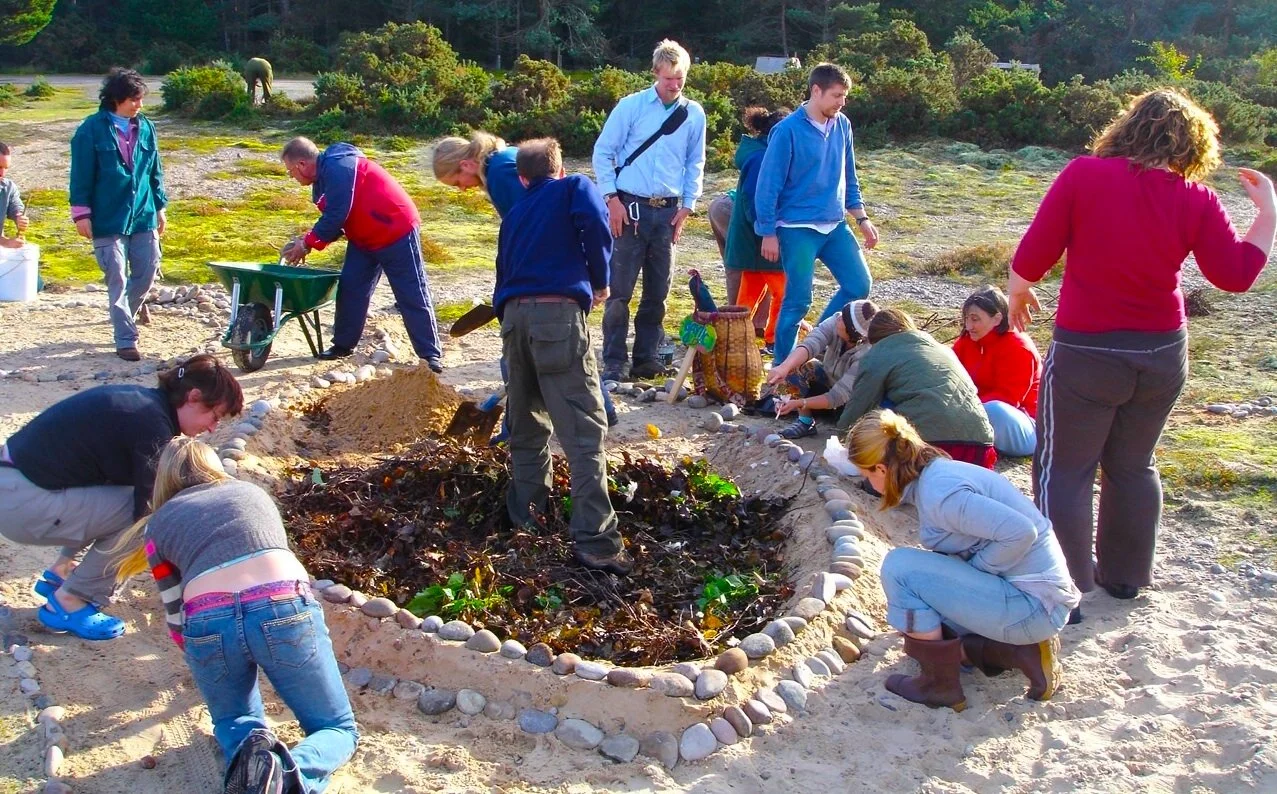
The Findhorn Ecovillage, as a vibrant field for implementing the multifaceted sustainability agenda, has attracted thousands of learners over the decades. Participants experience firsthand how to create and nurture community – from welcoming conflict as an invitation to growth, to practising consent decision-making and compassionate communication. They also learn by joining communal activities aligned to natural cycles.
This work has been further strengthened through longstanding collaboration with UNESCO and UNITAR. In particular, CIFAL Findhorn/Scotland – a UNITAR-affiliated training centre – has hosted over 100 seminars addressing the local and regional dimensions of global challenges, including climate change, renewable energy systems, biodiversity, the circular economy, sustainable housing, and green employment.
Together, these educational strands form a coherent and integrated learning field, aligning values, practice and application, and serving as a living demonstration of United Nations sustainable development agendas.
Alongside this social dimension, a wide range of ecological and design-based programmes has evolved. These include pioneering work in green building through the Building School, permaculture training in the Cullerne Gardens and surrounding growing sites, and initiatives exploring how human systems can align more closely with the intelligence of nature. Participants have gained experience in developing resilient local economies within planetary boundaries.
Through these integrated approaches, the Foundation has contributed to the emergence of generations of educators and practitioners equipped with the skills, insight, and ethical grounding to help reshape the human presence on Earth – moving from extractive systems toward regenerative, equitable and resource-conscious ways of living.
Living Laboratory for Human Settlements to Thrive
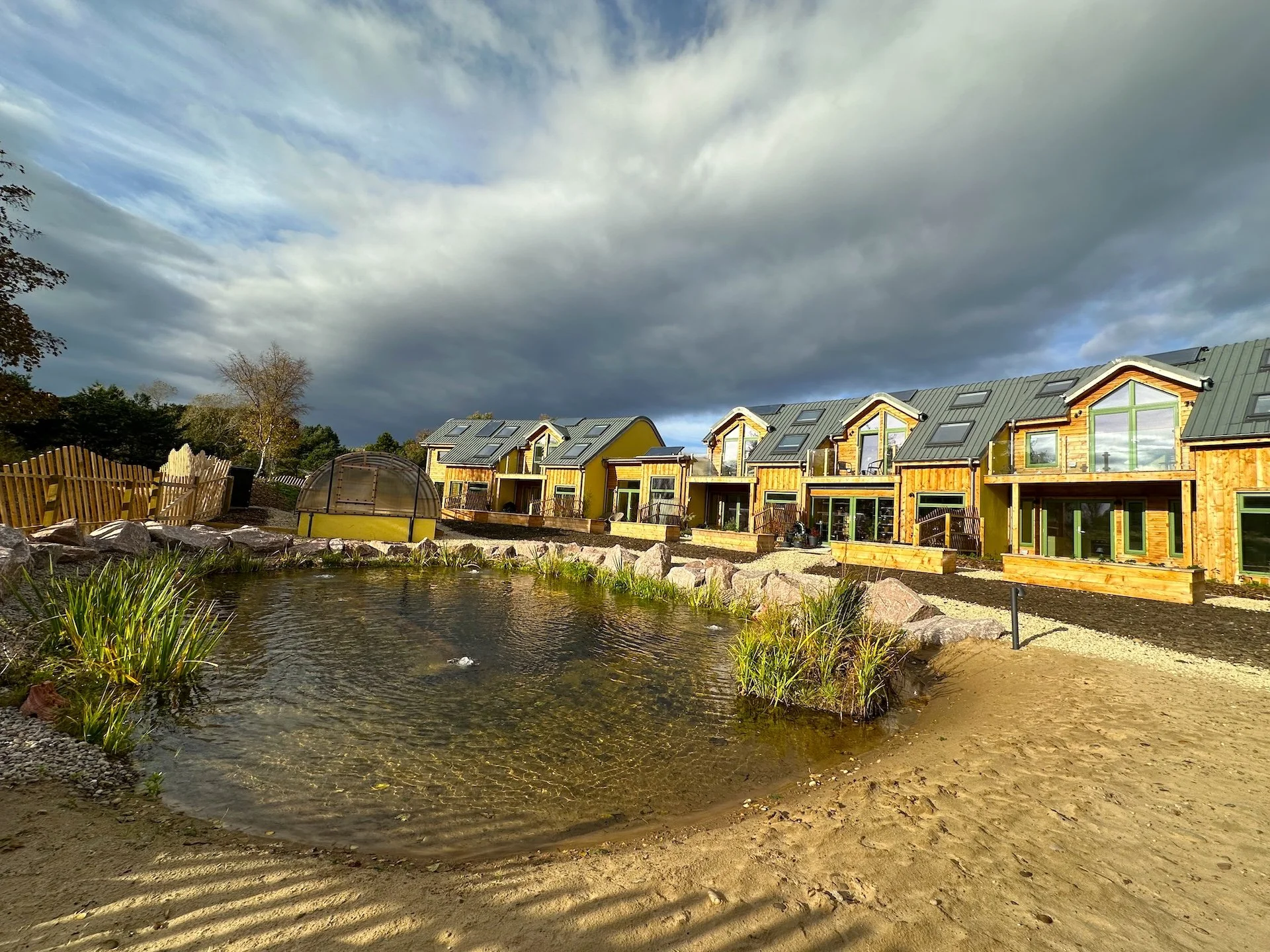
The Findhorn Ecovillage community is widely described as a living laboratory for redesigning our human presence on the planet – offering a practical demonstration of UN-Habitat principles for sustainable, inclusive and resilient human settlements. Its regenerative values are not theoretical; they are embodied, tested, and continuously refined in everyday life.
These are expressed through regenerative food growing and ecological stewardship (SDGs 2 and 15), energy-efficient buildings and renewable systems (SDGs 7 and 11), participatory decision-making (SDG 16), purpose-driven enterprises (SDG 8), and a culture that engages conflict as an opportunity for learning and connection (SDGs 4 and 16).
Life in the community is guided by a Gaian worldview, recognising humanity as part of a living, interconnected Earth system. Nature is engaged as a partner, informing practical action in biodiversity regeneration, low-impact living, and circular, place-based systems.
From its early gardens to its current infrastructure, the ecovillage demonstrates how human settlements can thrive alongside ecological systems – generating practical insights that support the UN-Habitat New Urban Agenda and the development of resilient and life-enhancing communities globally.
A Culture of Peace in Practice
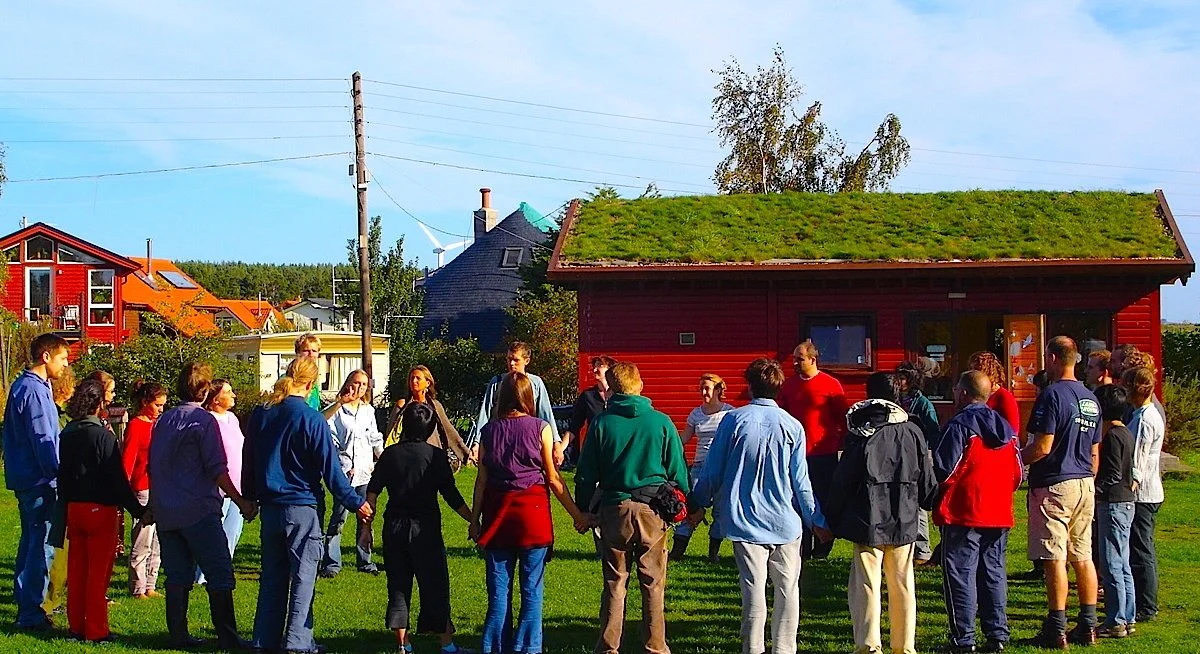
At Findhorn, a culture of peace is cultivated as both an inner and outer practice, offering a living demonstration of the ideals enshrined in the United Nations Charter. Daily life is guided by reflection, dialogue and mindful decision-making, with moments of stillness preceding discussion to encourage deeper listening and thoughtful response.
Conflict is approached not as a breakdown, but as an opportunity for growth and understanding, while unity is understood as the capacity to remain connected in diversity. The community brings together people from diverse cultural, spiritual and generational backgrounds, transforming this diversity into a source of learning and practical intercultural understanding. Through shared living and collaboration, participants cultivate respect across differences and a lived experience of global citizenship.
In doing so, Findhorn reflects and contributes to key UN Charter principles: cooperation to maintain international peace and security (Articles 1.1, 1.2, 2.5) and respect for human rights and fundamental freedoms (Articles 1.3 & 55), while also advancing social progress through inclusive and participatory community life.
In this way, Findhorn serves as a human-scale laboratory for the inclusive, cooperative, and rights-based society the United Nations seeks to support, demonstrating how these principles can be embodied in everyday life.

May East at Palais de Nations in Geneva

Frances Edwards and John Clausen
Our United Nations team
Since 1997 the Foundation has been represented by May East internationally and by Frances Edwards and John Clausen at the UN headquarters in New York. They attend regular DGC Briefings and other UN events such as the annual DGC/Civil Society Conference.
Frances currently serves as Convenor for the Spiritual Caucus and John serves on the Core Team for the NGO Major Group’s Unitive Cluster.
Through workshops, dialogues and events in New York and Geneva, the Foundation’s representatives have actively contributed to UN civil society engagement and values-based dialogue.
From Global Vision to Lived Practice
The partnership between the Findhorn Foundation Trust and the United Nations is life-enhancing because it bridges two essential dimensions of transformation: global vision and coordination, and local, lived experimentation and learning. The Trust contributes through education, training and international engagement, while the Ecovillage community contributes through demonstration, innovation and daily practice.
Together, they show that United Nations principles and frameworks can be lived, tested, and refined in real-world settings, offering a grounded and hopeful example of what becomes possible when global vision and lived practice come together.
View a timeline of three decades of co-operation between the Findhorn Foundation Trust and the United Nations.