
In conflict with someone? Get curious

Conflict is an inevitable part of being human. How you resolve conflict is the interesting part – it can even be an opportunity. Community member Bridget O’Donnell shares a four-step process for healing a conflict, drawn from Non-Violent Communication (NVC).
‘Get curious’ is Bridget's first response to the how-to-heal-conflict question. Curiosity can reveal the opportunity: exploring why a fight or disagreement has triggered you can be an eye-opening shortcut to learning more about yourself and your needs.
‘Resolving conflicts can help you understand yourself and others better, and gain skills to live life with more ease,’ says Bridget.
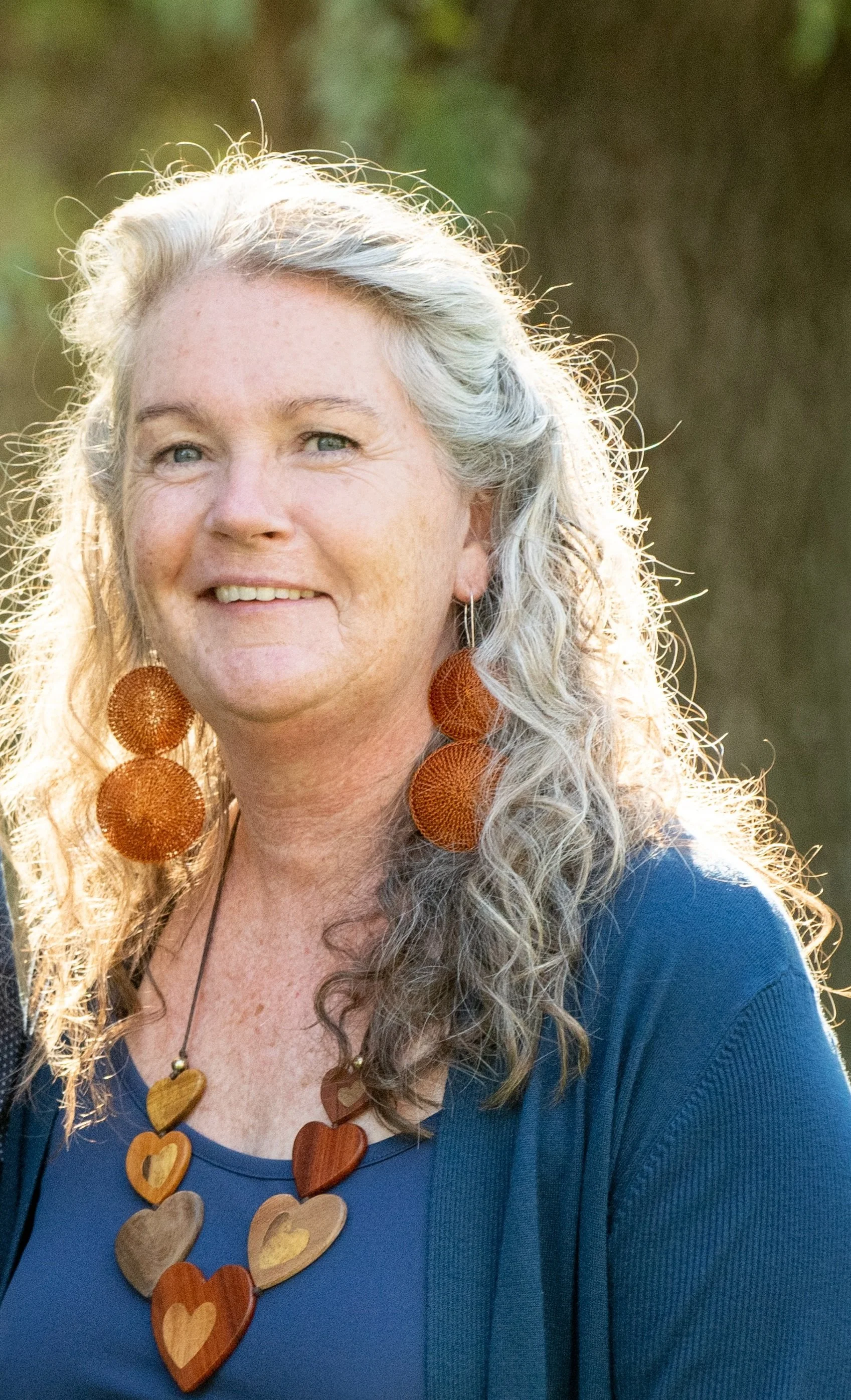
‘When we discover how powerful our words are we cultivate self-awareness. Conflict teaches us that what we do and say has an impact on others, and if others are suffering, we suffer too, because we’re all connected.’
Bridget is an NVC Trainer, certified by the Centre For NonViolent Communication (CNVC) in the USA, and has spent decades honing her skills around human behaviour and relationships. Here she leads us through NVC’s four-step process: Observation, Feelings, Needs and Request.
Part One – check in with yourself first
Our first response to a conflict with someone is often to jump to conclusions or judgements. What's wrong with them? I’m right, they’re wrong!
Instead, get curious: what are the facts of what happened? Observe and identify the actual thing they said or did, that was uncomfortable for you.
So start with yourself – after all, that’s our only realm of control. What feelings are alive in me? Maybe I’m triggered because underneath I’m feeling afraid or anxious or worried. What are my needs? Maybe it’s understanding, safety or connection. Our feelings always direct us to our needs. What needs of mine aren’t being met in this situation?
I may decide to do some journaling or more unpacking, if the issue is deeper than I realised. I want to make sure that when I do meet with them, I've dealt with my own stuff first, rather than going in and blaming them.
The more responsibility I can take for what impacted me, the more openly they’re going to receive me. Instead of hearing blame or shame or criticism, they're going to hear, ‘oh wow, my behaviour had an impact.’
They’ll be more likely to hear me as they won’t be trying to defend themselves against any judgement or criticism I'm bringing.
Then, I think about what I’d like to happen. It’s good to take time on this, so that when you speak to them, you have a really clear request. Decide if you’re going to set up a clearing, or send an e-mail or call them up.
Part Two – the get together
Check in first
When we meet up, we’ll go through the same four steps: Observation, Feelings, Needs and Request.
I've done my inner work so I'm hopefully not charged, and I’m clear about my needs. Check in with them first, and go in with empathy. They're not going to hear me if they have some emotion; they may go to fight, flight, freeze, or start defending themselves. They may hear criticism, even if it’s not there, because they're in that heightened state. So check if they have capacity in that moment.
Observe – with curiosity
Share your observation of what was said or done. ‘When you said or did this, I'm curious about what you were looking for, or how you were feeling. I'd really love to understand what was going on for you.’
Help them through the steps of Observation – Feeling – Need – Request. You’re giving them an opportunity to express how it was for them. And then when they feel heard, and you have some sense of what was going on for them, you can thank them and ask if they’d be willing to hear how it was for you.
Share your own feelings and needs
You can share what feelings came up for you, and the needs you identified when you did your inner work. Often our needs are the same, but we’re trying to meet them differently. It's quite extraordinary how often in a conflict the needs are actually the same on both sides.
Make a request that works for both of you
You can make a request about what you’d like to happen the next time the same issue arises. With any request, be willing to hear a ‘no’ (otherwise it’s a demand!). If it doesn’t work for them, invite them to suggest a different strategy. Keep the dialogue open about how you can meet each other’s needs if it happens again.
The goal is to connect, to develop understanding and to figure out a way forward that meets both your needs.
Discuss making amends
The best-case scenario is you’re both able to see each other’s impact. You have more understanding and together you can agree on how you’ll do things differently next time.
This is the space where you might have a request about making amends – for example, maybe there was damage you’d like them to pay for. They may be unwilling to contribute – keep the dialogue open with a counter request – perhaps sharing the cost. Be creative around what could meet your needs.
When you focus on the needs rather than the wrongdoing or the shoulds, it changes the dynamic. When they can hear and hopefully understand your needs, they’re more likely to be open to resolving the conflict.
What if there’s no willingness to meet and agree?
We can never change anyone else, only ourselves. It can happen that you get stuck – they’re not receiving your request and not suggesting anything that meets their needs. Try again – sometimes things shift for people over time, or overnight.
If the relationship is very important to you, or the conflict is affecting your mental health, keep trying to create connection, keep inviting. You can offer different scenarios: ‘This is really important to me – what would you need to hear from me in order to make it a yes from you? What if we met on neutral ground, or had a mediator?’
While your needs are precious, so are theirs. Their ‘no’ might be coming from having really strong needs for safety and support. They might feel frightened or threatened or uneasy about the conversation – or even really confused if they’ve been oblivious to the whole thing. If it's important, there's always an opportunity to rewind and try again.
What if they completely lean out, insist it’s your problem and don’t even want to meet up?
Yes, that's tricky. Then it’s about mourning – allowing yourself to mourn that this relationship is not going to get your needs met. It depends how important the relationship is and how much you want to invest in this person. You may realise that doing your own inner work is enough for you to move on.
The bottom line
Once people can hear and reflect back each other's needs, resolving the conflict becomes easier, because we all have the same needs really! Not necessarily at the same time, but we can all relate to the needs that are really important in all of us.
Bridget is co-facilitating Experience Week: From I to We from 13 December 2026, with more workshops lined up in 2027.
Connect with Bridget at www.restoreconnect.com.au
Main image by Ashes Sitoula on Unsplash